The prompt about whether Huxley's vision is more relevant today than Orwell's asks students to "write a carefully argued essay that agrees or disagrees with Postman's assertion." Unfortunately for me personally, I feel the need to be in partial agreement with Neil Postman rather than complete agreement or disagreement. The reason why is that there are examples of societies in the current world that can fit either Orwell's vision or Huxley's vision. For example, China and North Korea are Orwellian because the government "[deprives] people of their autonomy, maturity, and history" (Postman). (I should mention that Orwell actually based 1984 and Animal Farm on the Soviet Union, which I assume you already knew as a communist country like China and North Korea). As for Huxley's vision, the contemporary nation that I know that is closest to the vision is Russia. Indeed, Vladimir Putin may be an authoritarian criticized by other countries, but he is popular in Russia because he created a relatively strong economy while in power.* As for the United States, I think is is undeniable that Orwell's vision is less relevant than Huxley's (just like what the sample essay said). After all, I doubt that the current American administration is trying to impose authoritarianism (even though I am tempted to say it is doing so). I will rather argue that Trump's supporters sort of fulfill Huxley's vision because they praise Trump so much, that they wouldn't mind giving up their rights to give him power. In fact, many Trump supporters may be identified as being "reduced to passivity and egotism" because many of them seem to reject the science behind global warming all because Trump doesn't quite believe in it (Postman). (Please note that I am not saying Trump is an totalitarian dictator yet, our country is still very well a democracy and a majority of Americans dislike him). However, I do extremely disagree with the sample essay (I assume you remember what it discusses) about the degree of Huxley's relevance in America. While it is true that there are some programs that "[inflict] too much pleasure" (I would describe more as an addiction to pleasure rather than an excess), it is definitely not true that all "informative stations" provide documentaries that are meant to feed the "fascination" of "the bad guys." Not all documentaries are created equal. I personally saw documentaries of Nazi Germany, such as The Third Reich, that does not try to feed pleasure, but instead understanding and depression. Also, there are scientific documentaries, such as Cosmos, that actually try to help us understand the "modern world," not falsify it. Also, the sample essay seems to imply that "too much information" is inherently unhealthy, which I found a bit ironic. There is nothing wrong trying to know a lot of information. In fact, I think the more information one knows, the better off he or she is. After all, ignorant people can be susceptible to manipulation and treachery simply because they know too little, not "too much." I also want to point out that we can't really escape information in the modern world. For instance, Postman would have not written his passage without any knowledge of Huxley and Orwell. Similarly, the sample essay used examples from his or her prior knowledge, which is information in itself. We cannot even write any sort of essay without any information of how to write! Even the way College Board creates its prompts and find its sources (especially for the synthesis essay) involves information! Even the computers and technology used today was created from information of science. The fact that we learn English, science, history, and other subjects in school is information. I had even written this post using information I know. There are countless other examples of information that I can name. And it is the prevalence of information in our current society that makes me want to poke holes in the sample essay's argument since it needs and uses information of Huxley, Orwell, Postman, Amazon (which the writer uses an example from the knowledge the Internet provides), and PBS to even exist in the first place.
*I may be outdated with this information.
Saturday, April 22, 2017

Saturday, March 18, 2017
Political correctness vs. the Bradley effect.
While looking at the results of the 2016 election on TV, I was horrified that Donald Trump won. I was quite puzzled for several months about Trump's victory. How can such a rude man who constantly uses fallacies, hatred, and political incorrectness (he did say that all Mexican immigrants were "rapists") get elected as president? Even the polls were saying Hillary Clinton, who is more rational in my opinion, should've won. It wasn't until I listened to a political scientist on NPR that I understood why. According to this scientist, Trump won not because of ignorant Americans being concerned of the "bad" economy, but because of racism and nativism. To prove his claim, the political scientist provided an anecdote about a person he knew. This person was an environmentalist, and he supposedly advocated for people to save the environment. It is reasonable to assume that the environmentalist is a Clinton or Green Party supporter, but ironically, he voted for Trump. Apparently, this "environmentalist" revealed himself to be more concerned with immigrants than the environment. In fact, he wanted both legal and illegal immigrants to be deported from America. So he could have been lying when he expressed his support for the environment. He wasn't alone of course, there were plenty of Clinton "supporters" who had proudly denounced racism, sexism, and irrationality in the polls, yet they voted for Trump. Since Trump won, there were news stories of these very same fake Clinton supporters were engaging in racist activities, such as vandalizing Jewish synagogues. According to the political scientist, this paradoxical phenomenon (known as the Bradley effect) resulted from how racists (and other bigots) engaged in political correctness out of fear of being bullied by liberals. Yet while that claim to be not racist, they are lying; they still think like racists even if their language and actions imply the opposite. This not only explains why the polls were wrong about the election, but it shows how strong hatred, racism, sexism, and other forms of prejudice can be. These forces can be so strong that not even political correctness can completely eliminate them.
However, P.C. did provide the benefit of keeping these prejudices from insulting people in language; but since the politically incorrect Trump became president, the his supporters seem to be moving away from the P.C. movement. In fact, they are moving so far away, that I am becoming more concerned about the language anarchists than the "word police" (Kakutani 764).
However, P.C. did provide the benefit of keeping these prejudices from insulting people in language; but since the politically incorrect Trump became president, the his supporters seem to be moving away from the P.C. movement. In fact, they are moving so far away, that I am becoming more concerned about the language anarchists than the "word police" (Kakutani 764).
Saturday, March 11, 2017
Bland Analysis of Williams' piece
In "The Clan of One-Breasted Women," our class had discussed about how Williams advocated for civil disobedience to pressure the government into solving certain issues (that is, if the government isn't doing anything). In this post, I would like to elaborate on some textual evidence on how Terry Tempest Williams conveys her attitude of obedience.
When Williams describes the case of Irene Allen as "God-fearing people," she is referring to how Allen said "I am not blaming the government" (930). Basically, Williams is saying that trying to solve the issue of nuclear radiation by using the government (which Williams claims to have the authority of "God") has proved fruitless because the U.S. government hasn't done much about nuclear radiation. She emphasizes this point by saying "our government is immune;" it is "immune" to any issues where the government is supposedly responsible (Williams 930). Williams also says that Mrs. Allen is not the only person to stay obedient to the government by stating "This is just one story in anthology of thousands" (Williams 930). In fact, Williams clearly includes how her own family practiced "obedience" to the government, and it never solved the danger of nuclear radiation. Because her mother died from cancer and was obedient, Williams was motivated to "question everything" (931). In other words, Williams wants to practice civil disobedience because "blind obedience...ultimately takes our lives" (931). This perhaps explains why Terry Tempest Williams "crossed the line at the Nevada Test Site" because she believes her act of civil disobedience is a step forward in solving the issue of nuclear radiation.
When Williams describes the case of Irene Allen as "God-fearing people," she is referring to how Allen said "I am not blaming the government" (930). Basically, Williams is saying that trying to solve the issue of nuclear radiation by using the government (which Williams claims to have the authority of "God") has proved fruitless because the U.S. government hasn't done much about nuclear radiation. She emphasizes this point by saying "our government is immune;" it is "immune" to any issues where the government is supposedly responsible (Williams 930). Williams also says that Mrs. Allen is not the only person to stay obedient to the government by stating "This is just one story in anthology of thousands" (Williams 930). In fact, Williams clearly includes how her own family practiced "obedience" to the government, and it never solved the danger of nuclear radiation. Because her mother died from cancer and was obedient, Williams was motivated to "question everything" (931). In other words, Williams wants to practice civil disobedience because "blind obedience...ultimately takes our lives" (931). This perhaps explains why Terry Tempest Williams "crossed the line at the Nevada Test Site" because she believes her act of civil disobedience is a step forward in solving the issue of nuclear radiation.
Saturday, March 4, 2017
A Mock Letter from a Peacock to Tannen
Dear Deborah Tannen,
I have recently read your essay about how "there is no unmarked women" (Tannen 556). I was quite intrigued by your your argument; but I also found it mind-boggling to think about. Perhaps it is because I am a peacock that I fail to grasp how humans view gender. In fact, instead of having no "unmarked" females, as you suggest with humans, we have no "unmarked" males. We peacocks are expected by the peahens to bear many eye-spotted feathers on our tail. If one lacks such feathers, he is considered to be noticeably unattractive among peafowl. If one has plenty of these feathers, he is considered to be one of the most beautiful peacocks. Regardless of the number of tail feathers, peafowl almost always gab about how some peacocks are pretty while others are ugly. My wife, for instance, brags about the enormous amount of feathers I possess to her friends. (Both of us are pictured below). I also happened to see feather-lacking peacocks try to use branches and leaves to make fake quills*; they probably hope that other peafowl would not notice their disguised ugliness. Meanwhile, peahens "have the option of being unmarked" (Tannen 553). They do not have fancy feathers like mine, yet they are "unmarked." No one ever gossips about peahens' physical qualities. Even my wife never gets bashed or complimented for her looks. Peahens can make themselves "marked" if they dress up in any strange clothing, but males do not have the choice to make themselves "unmarked." My point is, that the gender roles in peafowl society are pretty reversed when compared to human society. So that is why I have trouble understanding your kind's mindset; it is almost as if our societies belong to different worlds
Sincerely,
Fictional Peacock
*Author's note: This does not happen in real life. Also, there are some other false facts about peacocks in this post.


I have recently read your essay about how "there is no unmarked women" (Tannen 556). I was quite intrigued by your your argument; but I also found it mind-boggling to think about. Perhaps it is because I am a peacock that I fail to grasp how humans view gender. In fact, instead of having no "unmarked" females, as you suggest with humans, we have no "unmarked" males. We peacocks are expected by the peahens to bear many eye-spotted feathers on our tail. If one lacks such feathers, he is considered to be noticeably unattractive among peafowl. If one has plenty of these feathers, he is considered to be one of the most beautiful peacocks. Regardless of the number of tail feathers, peafowl almost always gab about how some peacocks are pretty while others are ugly. My wife, for instance, brags about the enormous amount of feathers I possess to her friends. (Both of us are pictured below). I also happened to see feather-lacking peacocks try to use branches and leaves to make fake quills*; they probably hope that other peafowl would not notice their disguised ugliness. Meanwhile, peahens "have the option of being unmarked" (Tannen 553). They do not have fancy feathers like mine, yet they are "unmarked." No one ever gossips about peahens' physical qualities. Even my wife never gets bashed or complimented for her looks. Peahens can make themselves "marked" if they dress up in any strange clothing, but males do not have the choice to make themselves "unmarked." My point is, that the gender roles in peafowl society are pretty reversed when compared to human society. So that is why I have trouble understanding your kind's mindset; it is almost as if our societies belong to different worlds
Sincerely,
Fictional Peacock
*Author's note: This does not happen in real life. Also, there are some other false facts about peacocks in this post.

Saturday, February 25, 2017
"About Men" paragraph
In "About Men" Gretel Ehrlich states that "young cowboys are often evasive with women... they don't know how to bring their tenderness into the house" (572) She is obviously saying that cowboys can be shy around women. Yet, this statement does make the slight implication that cowboys are shy around women simply because they have different genders; however, others might argue, in a different interpretation of Ehrlich's statement, that it is the job that makes cowboys gentle like Ghandi.* Ehrlich does, of course, writes about how cowboys step away from their inner fears into outer space to save cow or cattle. In fact, she even says "A cowboy is someone who love his work. Since the hours are long... and the pay is $30 he has to" (Ehrlich 571). According to my personal interpretation, Ehrlich is saying that cowboys "love" their work not because they enjoy sleeping in a cavern, but because they earn a satisfactory amount of money. Cowboys only risk heir lives to save cows because it is their job to do so. He doesn't always feel a complete total attachment to the cattle (the cows will get slaughtered at a meat processing factory anyway), he just really needs to get the money. And because cowboys do not often hang around with women while working, they tend to be shy around women. This does raise some interesting questions though: Why do only men get to be cowboys during the 19th century? Why weren't there any cowgirls? These questions do not only apply to cowboys, but also football and ping-pong. In football, there rarely seems to be any known female athletes; there are only male football players (at least in professional football). Table tennis is not quite as extreme as football in gender segregation. However, professional ping-pong is often split into male and female tournaments, preventing men and women from playing against each other. Even several centuries ago when there were still powerful monarchs in Europe (who get called "Your majesty," "Your honor," etc.), there was an excessive majority of male rulers. Also, male monarchs are noticeably called "kings" while female monarchs are called "queens," implying gender segregation in language since both kinds of rulers are not addressed by the same title. There are even many more examples of gender segregation that are not included in this post. My point is that is it fair for women to not participate in activities that are considered to be men's jobs? It is fair for men and women to do participate together in activities such as sports? Feel free to answer in the comments.
*According to the internet, this name should be spelled as "Gandhi," not "Ghandi." So Ms. Valentino may have incorrectly spelled his name. Also, it is bit of a hyperbole to compare the gentleness of cowboys to that of Gandhi because Gandhi did not treat women very well. In fact, according to an article I found on the Internet, he was a misogynist. (The link to the article is below this footnote).
https://www.theguardian.com/commentisfree/2010/jan/27/mohandas-gandhi-women-india
*According to the internet, this name should be spelled as "Gandhi," not "Ghandi." So Ms. Valentino may have incorrectly spelled his name. Also, it is bit of a hyperbole to compare the gentleness of cowboys to that of Gandhi because Gandhi did not treat women very well. In fact, according to an article I found on the Internet, he was a misogynist. (The link to the article is below this footnote).
https://www.theguardian.com/commentisfree/2010/jan/27/mohandas-gandhi-women-india
Saturday, February 18, 2017
On my Understanding of Sarcasm
For almost my entire life, I have struggled to understand sarcasm. I have interpreted the literal meaning (or denotation) of people's phrases instead of their figurative meaning (or connotation) for a long time. For example, when I first read Swift's "A Modest Proposal" (sometime before my junior year), I actually thought Swift really wanted to use children as "food" (405). Since then, I assumed Swift was twisted and insane. It wasn't until my tenth grade English teacher clarified that Swift's paper was a satire that I started viewing him as not so crazy. Unfortunately, my new understanding of "A Modest Proposal" still didn't prepare me to identify sarcasm all the time. When having conversations with people, it often takes me five to ten minutes to process any sarcastic remarks. I have to constantly distinguish between the literal meaning of words and the connotation of words. Oftentimes, when I am listening to a speech or reading a sarcastic essay, I need more information than what the speech or essay provides to help me understand any sarcastic remarks without taking them too literally. (I apologize for being too repetitive.) For instance, if a teacher jokingly says that he will take a point off of my test for asking a stupid question, I will need to know for sure that he will not take off that point in order to understand his joke. If I am missing this piece of information, a heated argument will likely initiate between the teacher and me. Fortunately, I now am getting a grasp of what sarcasm is like (thanks to 11 AP English's stressful workload), but I still have a long way to go.
Friday, February 10, 2017
Why the Lobster?

Wallace vividly describes the various ways a lobster can experience "painful stimuli" and even uses scientific evidence to back his claim (Wallace 673). However, one may weakly argue that lobsters do not easily feel pain because that they do not have a "cerebral cortex" to feel any pain (qtd. in Wallace 673). This is a weak claim because Wallace easily makes a rebuttal by saying "this... claim is either false or fuzzy" (Wallace 673). Nevertheless, there is still a different argument to be made that does not reject the assumption that lobsters feel pain. It states that feeling pain is a part of being alive and is unavoidable. In other words, animals will feel pain while being eaten simply because of the food chain. Predators will keep on gruesomely and inhumanely eating prey even if all humans stopped eating meat. In fact, humans abusing a lamb for food is just as cruel as a lamb being eaten by wolves while the lamb is conscious. Therefore, humans should not care if about the pain animals suffer because of the food chain (or food web). Such consumption is simply a part of the cycle of life. (I am playing as a devil's advocate as I write this paragraph. So I personally do not completely agree with this justification of animal abuse.)
 Now I am going to give a personal criticism of "Consider the Lobster." I have always wondered why would Wallace choose a lobster out of all of the animals he could have chosen from (besides the fact that he visited the Maine Lobster Festival). In my opinion, there are many other examples of animals cruelty that could've served as better examples. In France, Geese get forcefully fattened even when they are not hungry so foie gras can be well made. In China, rabbits are skinned alive and have their fur gets processed into coats. (I do not know why they have to be alive.) In Korea, farmed puppies are hanged on a tree branch and are beaten to death (before being incinerated) to produce "better" meat. In America, chickens are drugged to have bigger breasts; but this increase in mass had gave the chickens more weight than their delicate, limp legs could carry. There are many more scenarios I can list, but I can't list them all because there are far too many of them. However, I do think that if Wallace used a bird or a mammal instead of a lobster, he would've made a bigger impact. After all, less people feel empathy for a lobster's suffering than that for a cow. In fact, many people in the real world would like to see lobsters get cooked as seen with the World's Largest Lobster Cooker being "an attraction" (Wallace 675). To put it bluntly, a lobster's life is treated like that of an "insect" (Wallace 666). Very few people will feel bad for a squashed fly or a poisoned ant; this attitude is roughly similar to that of cooking a lobster since most people don't think about an arthropod's pain. If Wallace wrote about a mammal, his essay may be more effective on his audience than it already is because many more people can connect to a mammal's feelings. They know that mammals clearly have a brain to sense pain. (Unlike lobsters, which don't have much of a brain.) Therefore, Wallace's essay may have a bigger impact on people's minds if he wrote about a different animal. (I am not saying "Consider the Lobster" was not effective at all, I am saying it could be more meaningful with some alterations.)
Saturday, February 4, 2017
Physical, not Verbal (and other stuff)
I had found Brad Manning's "Arm Wrestling with my Father" quite compelling. In fact, since Ms. Valentino pointed out some "form meets content" in the essay, I almost believed that Manning did not write the essay as a college freshman. Since I loved the essay so much, I will write about it in this post.
What I want to point out is the physical relationship between Manning and his father. I know there was plenty of hard-to-find evidence that was pointed out for this relationship, but I will try to do my best to introduce some new evidence with analysis. There is some imagery when Manning describes his father's hugs by saying "They made me suck in my breath and struggle for control, and the way he would pound on my back made rumbles in my ears." (Manning 147). Since the imagery is both tactile and auditory, it further contributes to the idea that "words were physical" (Manning 145). Manning is claiming that he could feel his father's expressions through his father's hugs. The onomatopoeia of the word "pound" helps create an analogy with the imagery between verbal words and physical words (Manning 147).
There are even some other examples of "form meets content" that we didn't discuss in class (in terms of what I remember of the discussion). The way Manning uses a short sentence that is "It was not a long match" (Manning 146) emphasizes how short the arm wrestling match was. In contrast, Manning uses longer sentences in paragraph 4 to show how the arm wrestling matches seemed longer when Manning was younger.
There are even some other examples of "form meets content" that we didn't discuss in class (in terms of what I remember of the discussion). The way Manning uses a short sentence that is "It was not a long match" (Manning 146) emphasizes how short the arm wrestling match was. In contrast, Manning uses longer sentences in paragraph 4 to show how the arm wrestling matches seemed longer when Manning was younger.
Friday, January 27, 2017
Discussion of Disabilities
Our discussion on Friday about Nancy Mairs' essay titled "Disability" had strongly reminded me about some disabled students at Troy High. I will briefly write about one of these disabled students, Ann.* I do not exactly know what type of disability Ann has, but I can describe what I know about her condition. She seems to be unable to move most of her limbs, which forces her to ride in a wheelchair. When she talks, her words are slightly challenging to understand since her mouth is partially paralyzed (which I concluded from my observations, but I don't know for sure). When I first saw Ann, I thought "Oh dear, what a poor, crippled girl!" I later regretted saying that statement in my mind. The reason why is that I wasn't viewing Ann as an ordinary human at the time (even though I thought that I did so at that moment). I was perceiving Ann as a helpless "cripple" (Mairs 14). I realized this former perception when I read Mairs' statement of how she is "not... Ms. MS, a walking, talking embodiment of a chronic incurable degenerative disease" (14). That sentence made me feel that I was amorally discriminating against Ann (and other disabled people) by saying "It must be terrible to live with disabilities!" Thanks to Mairs, I now know that in order to treat disabled people as ordinary, I will have to behave as if the disabled people I meet have no disabilities. (I am not saying that I will make a lie that disabled people do not have disabilities).
I know that I could have written a fictional narrative about a person with disabilities instead of mentioning Ann, but I am not qualified to write such a story. That is because I am not disabled, so I wouldn't completely understand how disabled people would feel. While it is true that I some idea of disabled people's emotions, I would have to be disabled myself to get the true understanding. I can find a way to give myself a disability, but I am not willing to do that.
*Names of Troy High School students have been changed, so don't bother looking up any names in the yearbook.
I know that I could have written a fictional narrative about a person with disabilities instead of mentioning Ann, but I am not qualified to write such a story. That is because I am not disabled, so I wouldn't completely understand how disabled people would feel. While it is true that I some idea of disabled people's emotions, I would have to be disabled myself to get the true understanding. I can find a way to give myself a disability, but I am not willing to do that.
*Names of Troy High School students have been changed, so don't bother looking up any names in the yearbook.
Saturday, December 17, 2016
A Red Line in the Sun
When I watched the video about Redlining that Ms. Valentino assigned us, I instantly made a connection to the ending of A Raisin in the Sun. The reason I made this connection is because Ruth says "the notes ain't but a hundred and twenty-five a month" (Hansberry 140). This is an obvious reference to the rent they had to pay for the new house, and is roughly similar to the rent the people interviewed in the video had to pay. (Even though the Younger family did have to pay for a lower fee.) However, it would suggest a probable ending for the Youngers that does not have them "BOMBED" in "Clybourne Park" (Hansberry 102). The Youngers may actually get to live in their new home with little violence, but may still suffer from extreme poverty.
I know that Hansberry did intend a white mob to attack the Youngers in the original version of the play, but the ending she did use wasn't quite specific in implying this event. While Karl Linder did tell the family of how desperate the white people in Clybourne Park wanted to keep black people out of their neighborhood, it does not guarantee that they will kill the Youngers. There is the possibility of the white people moving out of Clybourne Park. This would, of course, result in more empty houses, and allow for even more black families to move into the neighborhood. These families perhaps may need to pay an even higher fee than the Youngers' for their new houses, and eventually suffer from intense poverty. This does not mean the Youngers are better off, since their landlord could simply increase the fee for renting the house. As a result, Clybourne Park would become a lot like North Lawrence. Perhaps Hansberry purposely allows this alternate fate of the Youngers to be interpreted from her play, since segregation is a major theme in A Raisin in the Sun. After all, redlining is a strong example of segregation.

I know that Hansberry did intend a white mob to attack the Youngers in the original version of the play, but the ending she did use wasn't quite specific in implying this event. While Karl Linder did tell the family of how desperate the white people in Clybourne Park wanted to keep black people out of their neighborhood, it does not guarantee that they will kill the Youngers. There is the possibility of the white people moving out of Clybourne Park. This would, of course, result in more empty houses, and allow for even more black families to move into the neighborhood. These families perhaps may need to pay an even higher fee than the Youngers' for their new houses, and eventually suffer from intense poverty. This does not mean the Youngers are better off, since their landlord could simply increase the fee for renting the house. As a result, Clybourne Park would become a lot like North Lawrence. Perhaps Hansberry purposely allows this alternate fate of the Youngers to be interpreted from her play, since segregation is a major theme in A Raisin in the Sun. After all, redlining is a strong example of segregation.

Friday, December 9, 2016
Why does Fitzgerald Include Racism in his novels?
John, from The Diamond As Big As The Ritz, was put into "a state of terror" when he found out that Braddock murdered his guests (Fitzgerald 99). What I find that is very irritating is the John did not feel this when he first saw the "negroes" as slaves (Fitzgerald 79). In fact, it may prove that John could be a racist, or at least indifferent to blacks. Unfortunately, I cannot find enough textual evidence to prove this theory. So instead of pondering on if Fitzgerald or John is a racist, I will try my best to explain why F. Scott Fitzgerald includes these indirect references to racism.
It is important to remember that there was plenty of racists that existed in the Roaring 20's. There was even a famous racist organization that had gained a lot of power during this decade, which is, of course, the Klu Klux Klan. While Fitzgerald did try to focus both The Great Gatsby and The Diamond As Big As The Ritz (which was actually written for Fitzgerald's pleasure) on social class, it seems he couldn't avoid including racism simply because it was a big issue at the time. I actually think Fitzgerald was tempted to write a story that addresses racism, but he just was probably afraid of getting assassinated by the Klu Klux Klan or by a racist (or anti-racist) mob. So he vaguely includes racism in his novels as a result. (To be clear, I do not know for sure if this is true.)
Overall, I do not think that it matters if Fitzgerald is a racist or not. Racism does not seem to be the main point of his novels. (I am referring to The Great Gatsby and The Diamond As Big As The Ritz). As I stated before, Fitzgerald's main purpose in his two stories involved social classes. So I think that issue would be more vital (and easier) in analyzing some of Fitzgerald's texts.
It is important to remember that there was plenty of racists that existed in the Roaring 20's. There was even a famous racist organization that had gained a lot of power during this decade, which is, of course, the Klu Klux Klan. While Fitzgerald did try to focus both The Great Gatsby and The Diamond As Big As The Ritz (which was actually written for Fitzgerald's pleasure) on social class, it seems he couldn't avoid including racism simply because it was a big issue at the time. I actually think Fitzgerald was tempted to write a story that addresses racism, but he just was probably afraid of getting assassinated by the Klu Klux Klan or by a racist (or anti-racist) mob. So he vaguely includes racism in his novels as a result. (To be clear, I do not know for sure if this is true.)
Saturday, December 3, 2016
My Favorite passage from The Great Gatsby
Note: The following post uses the author's opinions.
The following passage is from page 88 of The Great Gatsby:
The following passage is from page 88 of The Great Gatsby:
"I walked out the back way-just as Gatsby had when he had made his nervous circuit of the house half an hour before-and ran for a huge black knotted tree, whose massed leaves made a fabric against the rain. Once more it was pouring, and my irregular lawn, well-shaved by Gatsby's gardener, abounded in small muddy swamps and prehistoric marshes. There was nothing to look at from under the tree except Gatsby's enormous house, so I stared at it, like Kant at his church steeple, for half an hour. A brewer had built it early in the "period" craze a decade before, and there was a story that he'd agreed to pay five years' taxes on all the neighboring cottages if the owners would have their roofs thatched with straw. Perhaps their refusal took the heart out of his plan to Found a Family-he went into an immediate decline. His children sold his house with the black wreath still on the door. Americans, while occasionally willing to be serfs, have always been obstinate about being peasantry." (Fitzgerald 88)Nick is obviously thinking about how Gatsby's house was built in the 1910s (since he mentioned "a decade before"). What I want to point out though is that the house was built by a "brewer" rather than anyone else. At first, I thought the brewer was a cook who just made soup to sell to his neighbors. I later realized that the brewer could have actually created alcoholic drinks because "he went into an immediate decline". This "decline" could have probably resulted from the 18th Amendment which started Prohibition. It could also be inferred that the brewer was wealthy because he wanted "all the neighboring cottages...have their roofs thatched with straw." Although the brewer "agreed to pay five years' taxes" for his neighbors, the "straw" is a symbol of poverty for the neighbors and how the brewer is richer, explaining why they refused the brewer's offer. There is also noticeable similarities between Gatsby and the brewer because they are both wealthy and made money from alcohol. The similarities perhaps reveal how Gatsby's mindset is stuck in the past. (Just to clarify, the brewer is not the same person as Gatsby because the brewer had children while Gatsby didn't). Nick had actually compared himself to "Kant" (a famous philosopher from the Enlightenment) because he makes a generalization of "Americans" at the end of the passage. This generalization could be referring to Tom and Daisy, who planed to stay at East Egg like "serfs", but moved out at the end of the book as "peasantry." (In case you didn't know, the difference between peasants and serfs is that peasants are allowed to move away from their land while serfs are forced by their lords to stay on their land. Also, I am not saying that Tom and Daisy are poor because I referred to them as peasants, they are obviously wealthy.)
Wednesday, November 23, 2016
Making America like the Roaring 20's
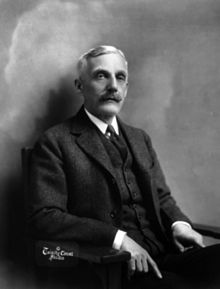
Fitzgerald had described this poverty as "a valley of ashes" in The Great Gatsby (Fitzgerald 23). He uses this metaphor to create an image of a filthy area. Since the area was so dirty, many "men" living in this area, such as George B. Wilson, are assumed to be of the lower class (Fitzgerald 23). Fitzgerald even includes a description of Doctor T. J. Eckleburg having "a pair of enormous yellow spectacles" to demonstrate how rich the man is because "yellow" looks very similar to gold (Fitzgerald 23). The fact that Eckleburg's portrait is above the "grey land" conveys the massive gap between the working class and upper class (Fitzgerald 23). Fitzgerald even seems to convey that the gap represents how only the upper class (and perhaps a bit of the middle class) were benefitting from the economic boom of the 1920s while the working class barely got any benefits at all. It is even very possible that some members of the working class desire to enjoy the pleasures of the upper class. Fitzgerald demonstrates this through Myrtle Wilson, who had claimed she "made a mistake" marrying Mr. Wilson (Fitzgerald 35). She is unsatisfied with Wilson because he wasn't wealthy. So she tries to be "Tom Buchanan's mistress" because she thinks Tom is her golden ticket to the wealthy class (Fitzgerald 24). Ironically, while Tom lets Myrtle be his mistress, they would not "get a divorce and get married to each other right away" (Fitzgerald 33). This perhaps shows that Tom does not want a lower class women to move into the upper class. Tom even "broke [Myrtle's] nose" at the end of chapter 2 (Fitzgerald 37).
Donald Trump had promised that he would "make America great again." He was referring to the excellent economy of the 1920s and how it was a "Golden Age". However, even if Trump succeeds in promoting a similar economic boom as the Roaring 20's, he would, according to Fitzgerald, be isolating the lower class. That's because many conservatives today in this country have the mindset of creating economic stability by using supply-side economics, which would mean practicing laissez-faire economics that mainly benefit the upper class. This concept would actually lead to a wider gap between the rich and the poor rather than a narrower one.
*Supply-side economics is a theory in which money from the upper class would gradually "trickle down" to the lower classes as the people of the upper class spend their money.
Saturday, November 19, 2016
My Final Impressions of The Bluest Eye
When I finished reading The Bluest Eye, I had mixed feelings about the book. On one perspective, I appreciate Toni Morrison's lyrical prose. She uses words such as "softly, purringly," and "lovingly" to create beautiful symbolic imagery (Morrison 58). There are even so many symbols Morrison uses, that it would take an entire year to decipher all of their meanings. I even loved how Morrison conveys how racism is more complex than it seems, and can affect society in unnoticable ways. On the other perspective, I would not recommend The Bluest Eye to anybody for leisure. Nor would I want to read the book again. I am even dissuaded from reading Morrison's other novels, including Song of Solomon. My reasons do not just include the disturbing incest scene, but also the ambiguous ending.
I will not go into detail about Pecola's rape because it is too sensitive of a topic for me to write about. Instead, I will criticize the ending dialogue for being too ambiguous. It is ambiguous because their is absolutely no way to know for sure that Pecola was talking to an imaginary friend. Morrison never even directly states that the friend was imagined by Pecola. I know that there are some people who may argue that the italicized words prove that the friend was part of Pecola's thoughts. My rebuttal is this: even though the friend's dialogue is italicized, it does not prove at all that he or she is imaginary. (I do not even know the friend's gender). Even Ms. Valentino's confirmation of the friend being made-up by Pecola is not enough. She had not written the book, Morrison did. Even if Morrison herself claims the friend was part of Pecola's mind, I would firmly ask her "Can you use textual evidence from the novel to prove your point?" Maybe she would admit the ending was flawed in its clarity, or maybe she would say the ending was ambiguous on purpose. If she replies with the former option, I would feel annoyed about how she made an obvious flaw. If she replies with the latter, I would automatically ponder on the ambiguity's meaning in an exhausting way. Regardless of which choice is correct, just thinking about it stresses me out. I prefer to read a book that actually provides a relaxing escape from my stressful life. The Bluest Eye just does the exact opposite.
Note: If you disagree with me, do not be afraid to comment. I won't delete it.

I will not go into detail about Pecola's rape because it is too sensitive of a topic for me to write about. Instead, I will criticize the ending dialogue for being too ambiguous. It is ambiguous because their is absolutely no way to know for sure that Pecola was talking to an imaginary friend. Morrison never even directly states that the friend was imagined by Pecola. I know that there are some people who may argue that the italicized words prove that the friend was part of Pecola's thoughts. My rebuttal is this: even though the friend's dialogue is italicized, it does not prove at all that he or she is imaginary. (I do not even know the friend's gender). Even Ms. Valentino's confirmation of the friend being made-up by Pecola is not enough. She had not written the book, Morrison did. Even if Morrison herself claims the friend was part of Pecola's mind, I would firmly ask her "Can you use textual evidence from the novel to prove your point?" Maybe she would admit the ending was flawed in its clarity, or maybe she would say the ending was ambiguous on purpose. If she replies with the former option, I would feel annoyed about how she made an obvious flaw. If she replies with the latter, I would automatically ponder on the ambiguity's meaning in an exhausting way. Regardless of which choice is correct, just thinking about it stresses me out. I prefer to read a book that actually provides a relaxing escape from my stressful life. The Bluest Eye just does the exact opposite.
Note: If you disagree with me, do not be afraid to comment. I won't delete it.
Saturday, November 12, 2016
Mr. Breedlove and Slavery
Reading the section of Cholly's past was a bit thought-provoking for me. Originally, I thought that Cholly was an indifferent alcohol addict; however, Morrison explains Cholly's life to show that he wasn't always a horrible alcoholic. Morrison even demonstrates how Cholly's life has been affected by society, which is something I will try to base this post on.
Before, I write about Cholly, I will like to mention the scene in which Aunt Jimmy, Mrs. Gaines, and Ms. Alice talk about a time when "Everybody in the world was in a position to give them orders" (Morrison 138). The most obvious inference is that the three women are referencing to their lives as slaves. They even remember "When white men beat their men, they cleaned up the blood and went home to receive abuse from the victim" (Morrison 138). Morrison includes this conversation because she wants to establish a connection to the event in which Cholly was caught by "two white men" while having sexual intercourse with Darlene (Morrison 147). Cholly ends up "hating [Darlene] so much" even though it was the white men who forced the couple to continue mating (Morrison 148). Cholly was willing to take out his humiliation on Darlene instead of the "hunters" because "Such an emotion would have destroyed him" (Morrison 150). This incident would be similar to Aunt Jimmy's conversation because Cholly has been abused by white men and wants to "strangle" Darlene (Morrison 149). He knows he could not "strangle" the white men because he knows they have more power over him, so he wants to punish someone who he thinks he has power over (which would be Darlene). The connection Morrison tries to make in this section is between slavery and Cholly's frustrated feelings. It serves as a message that conveys how slavery has a long-lasting legacy on American society, even though it doesn't exist anymore. This legacy perhaps manifests itself in the form of racism and beauty standards, all of which are subjects that Morrison tackles in The Bluest Eye.
Before, I write about Cholly, I will like to mention the scene in which Aunt Jimmy, Mrs. Gaines, and Ms. Alice talk about a time when "Everybody in the world was in a position to give them orders" (Morrison 138). The most obvious inference is that the three women are referencing to their lives as slaves. They even remember "When white men beat their men, they cleaned up the blood and went home to receive abuse from the victim" (Morrison 138). Morrison includes this conversation because she wants to establish a connection to the event in which Cholly was caught by "two white men" while having sexual intercourse with Darlene (Morrison 147). Cholly ends up "hating [Darlene] so much" even though it was the white men who forced the couple to continue mating (Morrison 148). Cholly was willing to take out his humiliation on Darlene instead of the "hunters" because "Such an emotion would have destroyed him" (Morrison 150). This incident would be similar to Aunt Jimmy's conversation because Cholly has been abused by white men and wants to "strangle" Darlene (Morrison 149). He knows he could not "strangle" the white men because he knows they have more power over him, so he wants to punish someone who he thinks he has power over (which would be Darlene). The connection Morrison tries to make in this section is between slavery and Cholly's frustrated feelings. It serves as a message that conveys how slavery has a long-lasting legacy on American society, even though it doesn't exist anymore. This legacy perhaps manifests itself in the form of racism and beauty standards, all of which are subjects that Morrison tackles in The Bluest Eye.
Friday, November 4, 2016
Observations of The Bluest Eye


Friday, October 28, 2016
Pigalle and Barbie

Saturday, October 22, 2016
Another Personal Analysis of Maus

In last week's post, I analyzed page 41 of the second volume of Maus and elaborated on the reason Spiegelman portrays Jews as mice. In this post, I would like to analyze the definition of race throughout Maus. I want to write about race because we had an interesting discussion on the topic the day before this post was made.
I would like to start with page 51 in volume I of Maus (it is displayed at the top of the post). The page features a close-up image of an aggressive Nazi soldier in the upper right-hand corner. The Nazi is portrayed as a monstrous cat with sharp, threatening fangs. Meanwhile, the Jewish soldiers are seen as timid mice who are afraid to "[say] a word" to the Nazi soldier (Spigelman 51). These features on the page most likely represent the ethnic stereotypes many Jews and Germans had against each other during World War II. The Jews were probably afraid of many Germans as if the Germans were monsters that they should avoid. On the other hand, some Germans may have viewed the Jews as a group of animals that are inferior to the German race. (I am aware that there were also some Germans that think Jews are a threat that should be eliminated. However, this perception is not clearly shown in page 51).
Page 51 of Maus I only represents one example of how race is defined in Nzai society. In fact, Spigelman presents many other examples of the perceptions of race throughout his entire graphic novel. Since the definition of race can depend on a society (as we had discussed before), Spigelman tries to reflect on his own struggles defining race in Maus. Spigelman best demonstrates this in page 11 of Maus II. The page shows Artie trying to decide "What kind of animal" his wife should be (Spigelman 11). He is struggling with his decision because while Francoise is French, she had converted her religion to Judaism. This section most likely shows how hard it is for someone to create a perfect definition of race.
Saturday, October 15, 2016
My personal analysis of "Maus"
WARNING!: There may be some spoilers of Maus. I suggest you should read both volumes first before reading this blog.
The Holocaust is considered to be one of the most horrific events in history. In fact, the event was so horrific, that it is very hard to make art portraying the Holocaust. Maus is an example of a comic book that portrays the Holocaust very powerfully. Because of its powerful portrayal, Maus has become one of my favorite comic books. I will not make this blog merely about what I liked about the graphic novel. Instead, I will analyze two different components I noticed in the book. (I am only analyzing two details because I do not have any time to examine everything in Maus.)
I would like to first mention a scene at the beginning of Chapter 2 of the second volume. In this section, Spiegelman (as a human wearing a mouse mask) states how "the first part of MAUS...was a critical and commercial success", yet he has "been feeling depressed" (Spiegelman 41). Spiegelman even creates a large picture of himself sitting on top of dead Jews. (This image is shown below under the paragraph). Spiegelman includes this section in the graphic novel because he notices how he is getting praise for his story. However, he actually feels guilt for receiving the credit because he did not create the story of Maus. He knows the story is a true tale of his father's experience in the Holocaust. He knows that if the Holocaust never happened, he would've never made Maus. In other words, Spiegelman feels as if he is making a profit from the people who have died in the Holocaust. He emphasizes this in page 42 of Maus II when he gets interviewed by various people. It is clearly shown in his responses, such as "I-I never thought of reducing it to a message" (Spiegelman 42), that he does not want to receive all of the credit for his father's story.
 Another detail I would like to refer to is why Spiegelman portrays Jews as mice. I know that in class, we have already discussed the reasons. We deduced that Spiegelman Portrays Jews as mice and Nazis as cats because cats prey on mice. Therefore, most of us agreed that Spiegelman wanted to symbolize how the Nazis "preyed" on the Jews. I would actually like to point out another possible reason for the symbolism of mice. If you look at page 109 of Volume 1, you see 3 frames revealing a close-up of Tosha's facial expressions. (I know the image below says page 111 and is in a foreign language, but the section is really in page 109 in our English copy of Maus). While there is some noticeable change in her facial expressions among the panels, each expression still looks very similar to each other. So if Spiegelman were to only use pictures in Maus, then many readers would not feel any emotion from the story. In fact, these similar facial expressions are used in every single Jewish character in the book. Also, the faces of the characters drawn as mice were so similarly, that I had a hard time distinguishing between these characters at various parts of the comic book. Spiegelman uses the face of a mouse for some of his characters because there aren't many facial expression to be made with a mouse's face. Spiegelman could have portrayed the Jews as humans and add in the facial expressions (as he did with the brief comic known as "Prisoner on the Hell Planet"). But he instead uses a mouse's face simply because he couldn't find a way to demonstrate how it felt to be in the Holocaust. He could not find this way because he didn't witness the Holocaust, his father did. So he portrays Jews as mice to not only symbolize how they were hunted by the Nazis, but also to demonstrate that people would never truly know the horrors of the Holocaust (unless they witnessed it themselves).

The Holocaust is considered to be one of the most horrific events in history. In fact, the event was so horrific, that it is very hard to make art portraying the Holocaust. Maus is an example of a comic book that portrays the Holocaust very powerfully. Because of its powerful portrayal, Maus has become one of my favorite comic books. I will not make this blog merely about what I liked about the graphic novel. Instead, I will analyze two different components I noticed in the book. (I am only analyzing two details because I do not have any time to examine everything in Maus.)
I would like to first mention a scene at the beginning of Chapter 2 of the second volume. In this section, Spiegelman (as a human wearing a mouse mask) states how "the first part of MAUS...was a critical and commercial success", yet he has "been feeling depressed" (Spiegelman 41). Spiegelman even creates a large picture of himself sitting on top of dead Jews. (This image is shown below under the paragraph). Spiegelman includes this section in the graphic novel because he notices how he is getting praise for his story. However, he actually feels guilt for receiving the credit because he did not create the story of Maus. He knows the story is a true tale of his father's experience in the Holocaust. He knows that if the Holocaust never happened, he would've never made Maus. In other words, Spiegelman feels as if he is making a profit from the people who have died in the Holocaust. He emphasizes this in page 42 of Maus II when he gets interviewed by various people. It is clearly shown in his responses, such as "I-I never thought of reducing it to a message" (Spiegelman 42), that he does not want to receive all of the credit for his father's story.
Saturday, October 8, 2016
My Self-centered self (and Wallace's speech)
As I was reading "This is Water" by David Foster Wallace, I found myself making connections to the"natural, basic self-centeredness" (Wallace 233). I had realized how I am a self-centered person myself. As a result, I will attempt make this blog about how Wallace establishes these connections of self-centeredness (and occasionally write about how I am self-centered).
Wallace perhaps establishes the connections of "self-centeredness" by his use of hypothetical situations. He uses examples such as "let's say it's an average day...and at the end of the day you're tired, and you're stressed out" (Wallace 234), and "the checkout line is incredibly long" (Wallace 235). These examples help the audience make connections to their own lives. Even I was reminded of how I had to wait in line to buy lunch in school. I especially have selfish thoughts when I am starving, thinking only about getting the food and wishing all the people standing in front of me would get out of my way. I had never realized that selfish thoughts as these part of a "natural, hard-wired default-setting" (Wallace 233) until I read "This is Water".
Wallace also suggests that we should be "able truly to care about other people and to sacrifice for them, over and over, in myriad petty little unsexy ways, every day" (Wallace 237). What he means by this statement is that people should focus more on their surroundings rather than inside their minds. He isn't denouncing self-centered thought as a "sin" since he says "if I choose to think this way, fine, lots of us do" (Wallace 236). He is rather encouraging us to try to resist being too "self-centered". This would be an "unimaginably hard" task to do for most people, even myself, but we can at least try to do so (Wallace 238).
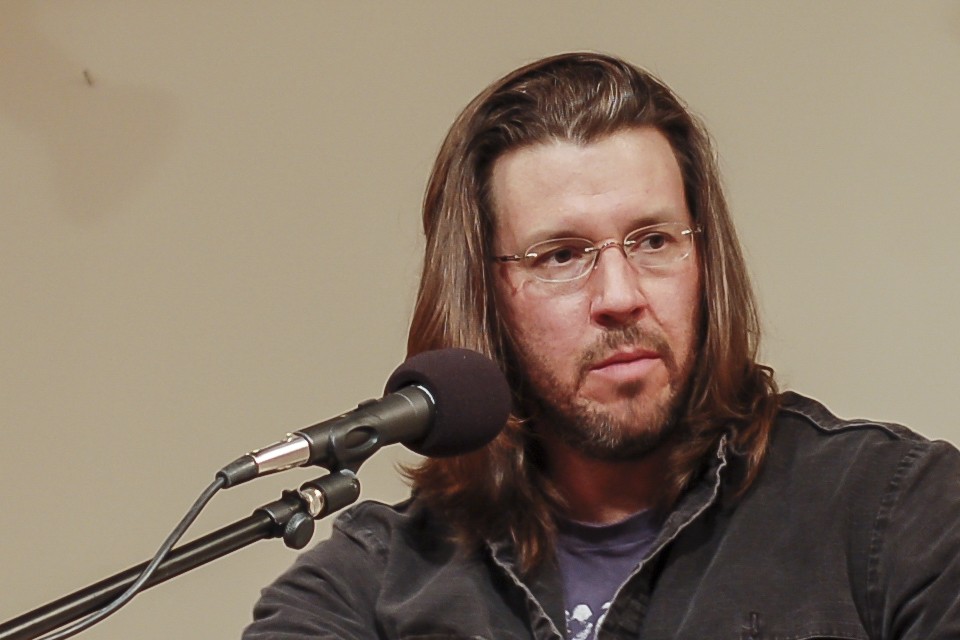
Wallace also suggests that we should be "able truly to care about other people and to sacrifice for them, over and over, in myriad petty little unsexy ways, every day" (Wallace 237). What he means by this statement is that people should focus more on their surroundings rather than inside their minds. He isn't denouncing self-centered thought as a "sin" since he says "if I choose to think this way, fine, lots of us do" (Wallace 236). He is rather encouraging us to try to resist being too "self-centered". This would be an "unimaginably hard" task to do for most people, even myself, but we can at least try to do so (Wallace 238).
Subscribe to:
Posts (Atom)