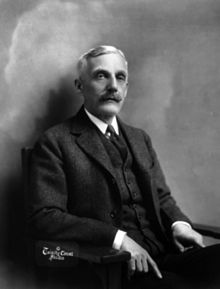
The 1920s was a period of excellent economic growth for the United States. The nation had just victoriously finished fighting in World War I, which had allowed increased industrial production. Many American residents had just begun to buy products on credit. Even a lot of big corporations, such as GM, gained huge profits from speculation. Americans also enjoyed plenty of entertainment from movies and radios. Meanwhile, the U.S. government tried to not interfere with the economy since they had embraced the concept of supply-side economics* (as advised by Secretary of Treasury Andrew W. Mellon). But the lack of government intervention didn't seem to matter because the 1920s had arguably the image of an "American Golden Age". It is this "Golden Age" that many conservative Republicans today, especially Donald Trump, strive to go back to. But F. Scott Fitzgerald had noticed that the economic boom had come at a huge cost: poverty among the working class.
Fitzgerald had described this poverty as "a valley of ashes" in The Great Gatsby (Fitzgerald 23). He uses this metaphor to create an image of a filthy area. Since the area was so dirty, many "men" living in this area, such as George B. Wilson, are assumed to be of the lower class (Fitzgerald 23). Fitzgerald even includes a description of Doctor T. J. Eckleburg having "a pair of enormous yellow spectacles" to demonstrate how rich the man is because "yellow" looks very similar to gold (Fitzgerald 23). The fact that Eckleburg's portrait is above the "grey land" conveys the massive gap between the working class and upper class (Fitzgerald 23). Fitzgerald even seems to convey that the gap represents how only the upper class (and perhaps a bit of the middle class) were benefitting from the economic boom of the 1920s while the working class barely got any benefits at all. It is even very possible that some members of the working class desire to enjoy the pleasures of the upper class. Fitzgerald demonstrates this through Myrtle Wilson, who had claimed she "made a mistake" marrying Mr. Wilson (Fitzgerald 35). She is unsatisfied with Wilson because he wasn't wealthy. So she tries to be "Tom Buchanan's mistress" because she thinks Tom is her golden ticket to the wealthy class (Fitzgerald 24). Ironically, while Tom lets Myrtle be his mistress, they would not "get a divorce and get married to each other right away" (Fitzgerald 33). This perhaps shows that Tom does not want a lower class women to move into the upper class. Tom even "broke [Myrtle's] nose" at the end of chapter 2 (Fitzgerald 37).
Donald Trump had promised that he would "make America great again." He was referring to the excellent economy of the 1920s and how it was a "Golden Age". However, even if Trump succeeds in promoting a similar economic boom as the Roaring 20's, he would, according to Fitzgerald, be isolating the lower class. That's because many conservatives today in this country have the mindset of creating economic stability by using supply-side economics, which would mean practicing laissez-faire economics that mainly benefit the upper class. This concept would actually lead to a wider gap between the rich and the poor rather than a narrower one.
*Supply-side economics is a theory in which money from the upper class would gradually "trickle down" to the lower classes as the people of the upper class spend their money.
Wednesday, November 23, 2016
Saturday, November 19, 2016
My Final Impressions of The Bluest Eye
When I finished reading The Bluest Eye, I had mixed feelings about the book. On one perspective, I appreciate Toni Morrison's lyrical prose. She uses words such as "softly, purringly," and "lovingly" to create beautiful symbolic imagery (Morrison 58). There are even so many symbols Morrison uses, that it would take an entire year to decipher all of their meanings. I even loved how Morrison conveys how racism is more complex than it seems, and can affect society in unnoticable ways. On the other perspective, I would not recommend The Bluest Eye to anybody for leisure. Nor would I want to read the book again. I am even dissuaded from reading Morrison's other novels, including Song of Solomon. My reasons do not just include the disturbing incest scene, but also the ambiguous ending.
I will not go into detail about Pecola's rape because it is too sensitive of a topic for me to write about. Instead, I will criticize the ending dialogue for being too ambiguous. It is ambiguous because their is absolutely no way to know for sure that Pecola was talking to an imaginary friend. Morrison never even directly states that the friend was imagined by Pecola. I know that there are some people who may argue that the italicized words prove that the friend was part of Pecola's thoughts. My rebuttal is this: even though the friend's dialogue is italicized, it does not prove at all that he or she is imaginary. (I do not even know the friend's gender). Even Ms. Valentino's confirmation of the friend being made-up by Pecola is not enough. She had not written the book, Morrison did. Even if Morrison herself claims the friend was part of Pecola's mind, I would firmly ask her "Can you use textual evidence from the novel to prove your point?" Maybe she would admit the ending was flawed in its clarity, or maybe she would say the ending was ambiguous on purpose. If she replies with the former option, I would feel annoyed about how she made an obvious flaw. If she replies with the latter, I would automatically ponder on the ambiguity's meaning in an exhausting way. Regardless of which choice is correct, just thinking about it stresses me out. I prefer to read a book that actually provides a relaxing escape from my stressful life. The Bluest Eye just does the exact opposite.
Note: If you disagree with me, do not be afraid to comment. I won't delete it.
I will not go into detail about Pecola's rape because it is too sensitive of a topic for me to write about. Instead, I will criticize the ending dialogue for being too ambiguous. It is ambiguous because their is absolutely no way to know for sure that Pecola was talking to an imaginary friend. Morrison never even directly states that the friend was imagined by Pecola. I know that there are some people who may argue that the italicized words prove that the friend was part of Pecola's thoughts. My rebuttal is this: even though the friend's dialogue is italicized, it does not prove at all that he or she is imaginary. (I do not even know the friend's gender). Even Ms. Valentino's confirmation of the friend being made-up by Pecola is not enough. She had not written the book, Morrison did. Even if Morrison herself claims the friend was part of Pecola's mind, I would firmly ask her "Can you use textual evidence from the novel to prove your point?" Maybe she would admit the ending was flawed in its clarity, or maybe she would say the ending was ambiguous on purpose. If she replies with the former option, I would feel annoyed about how she made an obvious flaw. If she replies with the latter, I would automatically ponder on the ambiguity's meaning in an exhausting way. Regardless of which choice is correct, just thinking about it stresses me out. I prefer to read a book that actually provides a relaxing escape from my stressful life. The Bluest Eye just does the exact opposite.
Note: If you disagree with me, do not be afraid to comment. I won't delete it.
Saturday, November 12, 2016
Mr. Breedlove and Slavery
Reading the section of Cholly's past was a bit thought-provoking for me. Originally, I thought that Cholly was an indifferent alcohol addict; however, Morrison explains Cholly's life to show that he wasn't always a horrible alcoholic. Morrison even demonstrates how Cholly's life has been affected by society, which is something I will try to base this post on.
Before, I write about Cholly, I will like to mention the scene in which Aunt Jimmy, Mrs. Gaines, and Ms. Alice talk about a time when "Everybody in the world was in a position to give them orders" (Morrison 138). The most obvious inference is that the three women are referencing to their lives as slaves. They even remember "When white men beat their men, they cleaned up the blood and went home to receive abuse from the victim" (Morrison 138). Morrison includes this conversation because she wants to establish a connection to the event in which Cholly was caught by "two white men" while having sexual intercourse with Darlene (Morrison 147). Cholly ends up "hating [Darlene] so much" even though it was the white men who forced the couple to continue mating (Morrison 148). Cholly was willing to take out his humiliation on Darlene instead of the "hunters" because "Such an emotion would have destroyed him" (Morrison 150). This incident would be similar to Aunt Jimmy's conversation because Cholly has been abused by white men and wants to "strangle" Darlene (Morrison 149). He knows he could not "strangle" the white men because he knows they have more power over him, so he wants to punish someone who he thinks he has power over (which would be Darlene). The connection Morrison tries to make in this section is between slavery and Cholly's frustrated feelings. It serves as a message that conveys how slavery has a long-lasting legacy on American society, even though it doesn't exist anymore. This legacy perhaps manifests itself in the form of racism and beauty standards, all of which are subjects that Morrison tackles in The Bluest Eye.
Friday, November 4, 2016
Observations of The Bluest Eye
Friday, October 28, 2016
Pigalle and Barbie
Once upon a time, my parents and I traveled to Paris France over the summer. During our trip we strolled across an infamous district known as Pigalle. While we were crossing the area, I saw the strangest, dirtiest objects in the world: naked female dolls, condoms, pornographic DVDs, extremely skimpy clothing, and even phallic slippers that were on display in sex shops. (Pigalle is known for prostitution, sex shops, strip clubs, etc.) The reason why I mention Pigalle is that Emily Prager's rhetoric in "Our Barbies, Ourselves" reminded me of what I saw in Pigalle. Even Prager's reference to how Barbie's "breasts are so out of proportion to the rest of her body" reminded me of the toys in Pigalle that were probably used for masturbation (Prager 353). Anyways, Prager's use of her sexual references to Barbie's figure is meant to convey how women should not be treated as sex toys. Personally, I do agree with Prager in how everyone should not perceive women as mere sex dolls; however, I do not think that Prager is trying to say that these portrayals should be illegal everywhere. She especially does not think that forcing women to cover themselves is a sufficient solution to prevent these portrayals. She implies this when she says "Before Barbie, American dolls...represented the kind of girls who looked perfect in jodhpurs" (Prager 354). In class, Ms. Valentino showed us a picture of one of these "American dolls", which was virtually covered in clothing. We discussed how these "dolls" may represent how women in the past were taught not only to be an ideal wife and mother, but also to hide their physical characteristics from men. Therefore, Prager's reference to the "dolls" symbolizes how she is also against extremely conservative views of women. However, Prager barely makes any mention of pornography or prostitution. She only refers to porn by saying "movies and videos are still filled with topless women" (Prager 355). Unfortunately, I think this virtual neglect of mentioning porn may cause someone to interpret the article to say that porn should be illegal today. I do not think that pornography should be banned for the reason of preventing Jesus from being dismayed. I also do not think that people who make videos of humans making love to pink elephants should be punished. But the thought of anyone interpreting these views against porn from Prager's essay frightens me very much.
Saturday, October 22, 2016
Another Personal Analysis of Maus
In last week's post, I analyzed page 41 of the second volume of Maus and elaborated on the reason Spiegelman portrays Jews as mice. In this post, I would like to analyze the definition of race throughout Maus. I want to write about race because we had an interesting discussion on the topic the day before this post was made.
I would like to start with page 51 in volume I of Maus (it is displayed at the top of the post). The page features a close-up image of an aggressive Nazi soldier in the upper right-hand corner. The Nazi is portrayed as a monstrous cat with sharp, threatening fangs. Meanwhile, the Jewish soldiers are seen as timid mice who are afraid to "[say] a word" to the Nazi soldier (Spigelman 51). These features on the page most likely represent the ethnic stereotypes many Jews and Germans had against each other during World War II. The Jews were probably afraid of many Germans as if the Germans were monsters that they should avoid. On the other hand, some Germans may have viewed the Jews as a group of animals that are inferior to the German race. (I am aware that there were also some Germans that think Jews are a threat that should be eliminated. However, this perception is not clearly shown in page 51).
Page 51 of Maus I only represents one example of how race is defined in Nzai society. In fact, Spigelman presents many other examples of the perceptions of race throughout his entire graphic novel. Since the definition of race can depend on a society (as we had discussed before), Spigelman tries to reflect on his own struggles defining race in Maus. Spigelman best demonstrates this in page 11 of Maus II. The page shows Artie trying to decide "What kind of animal" his wife should be (Spigelman 11). He is struggling with his decision because while Francoise is French, she had converted her religion to Judaism. This section most likely shows how hard it is for someone to create a perfect definition of race.
Saturday, October 15, 2016
My personal analysis of "Maus"
WARNING!: There may be some spoilers of Maus. I suggest you should read both volumes first before reading this blog.
The Holocaust is considered to be one of the most horrific events in history. In fact, the event was so horrific, that it is very hard to make art portraying the Holocaust. Maus is an example of a comic book that portrays the Holocaust very powerfully. Because of its powerful portrayal, Maus has become one of my favorite comic books. I will not make this blog merely about what I liked about the graphic novel. Instead, I will analyze two different components I noticed in the book. (I am only analyzing two details because I do not have any time to examine everything in Maus.)
I would like to first mention a scene at the beginning of Chapter 2 of the second volume. In this section, Spiegelman (as a human wearing a mouse mask) states how "the first part of MAUS...was a critical and commercial success", yet he has "been feeling depressed" (Spiegelman 41). Spiegelman even creates a large picture of himself sitting on top of dead Jews. (This image is shown below under the paragraph). Spiegelman includes this section in the graphic novel because he notices how he is getting praise for his story. However, he actually feels guilt for receiving the credit because he did not create the story of Maus. He knows the story is a true tale of his father's experience in the Holocaust. He knows that if the Holocaust never happened, he would've never made Maus. In other words, Spiegelman feels as if he is making a profit from the people who have died in the Holocaust. He emphasizes this in page 42 of Maus II when he gets interviewed by various people. It is clearly shown in his responses, such as "I-I never thought of reducing it to a message" (Spiegelman 42), that he does not want to receive all of the credit for his father's story.
Another detail I would like to refer to is why Spiegelman portrays Jews as mice. I know that in class, we have already discussed the reasons. We deduced that Spiegelman Portrays Jews as mice and Nazis as cats because cats prey on mice. Therefore, most of us agreed that Spiegelman wanted to symbolize how the Nazis "preyed" on the Jews. I would actually like to point out another possible reason for the symbolism of mice. If you look at page 109 of Volume 1, you see 3 frames revealing a close-up of Tosha's facial expressions. (I know the image below says page 111 and is in a foreign language, but the section is really in page 109 in our English copy of Maus). While there is some noticeable change in her facial expressions among the panels, each expression still looks very similar to each other. So if Spiegelman were to only use pictures in Maus, then many readers would not feel any emotion from the story. In fact, these similar facial expressions are used in every single Jewish character in the book. Also, the faces of the characters drawn as mice were so similarly, that I had a hard time distinguishing between these characters at various parts of the comic book. Spiegelman uses the face of a mouse for some of his characters because there aren't many facial expression to be made with a mouse's face. Spiegelman could have portrayed the Jews as humans and add in the facial expressions (as he did with the brief comic known as "Prisoner on the Hell Planet"). But he instead uses a mouse's face simply because he couldn't find a way to demonstrate how it felt to be in the Holocaust. He could not find this way because he didn't witness the Holocaust, his father did. So he portrays Jews as mice to not only symbolize how they were hunted by the Nazis, but also to demonstrate that people would never truly know the horrors of the Holocaust (unless they witnessed it themselves).
The Holocaust is considered to be one of the most horrific events in history. In fact, the event was so horrific, that it is very hard to make art portraying the Holocaust. Maus is an example of a comic book that portrays the Holocaust very powerfully. Because of its powerful portrayal, Maus has become one of my favorite comic books. I will not make this blog merely about what I liked about the graphic novel. Instead, I will analyze two different components I noticed in the book. (I am only analyzing two details because I do not have any time to examine everything in Maus.)
I would like to first mention a scene at the beginning of Chapter 2 of the second volume. In this section, Spiegelman (as a human wearing a mouse mask) states how "the first part of MAUS...was a critical and commercial success", yet he has "been feeling depressed" (Spiegelman 41). Spiegelman even creates a large picture of himself sitting on top of dead Jews. (This image is shown below under the paragraph). Spiegelman includes this section in the graphic novel because he notices how he is getting praise for his story. However, he actually feels guilt for receiving the credit because he did not create the story of Maus. He knows the story is a true tale of his father's experience in the Holocaust. He knows that if the Holocaust never happened, he would've never made Maus. In other words, Spiegelman feels as if he is making a profit from the people who have died in the Holocaust. He emphasizes this in page 42 of Maus II when he gets interviewed by various people. It is clearly shown in his responses, such as "I-I never thought of reducing it to a message" (Spiegelman 42), that he does not want to receive all of the credit for his father's story.
Another detail I would like to refer to is why Spiegelman portrays Jews as mice. I know that in class, we have already discussed the reasons. We deduced that Spiegelman Portrays Jews as mice and Nazis as cats because cats prey on mice. Therefore, most of us agreed that Spiegelman wanted to symbolize how the Nazis "preyed" on the Jews. I would actually like to point out another possible reason for the symbolism of mice. If you look at page 109 of Volume 1, you see 3 frames revealing a close-up of Tosha's facial expressions. (I know the image below says page 111 and is in a foreign language, but the section is really in page 109 in our English copy of Maus). While there is some noticeable change in her facial expressions among the panels, each expression still looks very similar to each other. So if Spiegelman were to only use pictures in Maus, then many readers would not feel any emotion from the story. In fact, these similar facial expressions are used in every single Jewish character in the book. Also, the faces of the characters drawn as mice were so similarly, that I had a hard time distinguishing between these characters at various parts of the comic book. Spiegelman uses the face of a mouse for some of his characters because there aren't many facial expression to be made with a mouse's face. Spiegelman could have portrayed the Jews as humans and add in the facial expressions (as he did with the brief comic known as "Prisoner on the Hell Planet"). But he instead uses a mouse's face simply because he couldn't find a way to demonstrate how it felt to be in the Holocaust. He could not find this way because he didn't witness the Holocaust, his father did. So he portrays Jews as mice to not only symbolize how they were hunted by the Nazis, but also to demonstrate that people would never truly know the horrors of the Holocaust (unless they witnessed it themselves).
Subscribe to:
Posts (Atom)